At-a-Glance: Catastrophic hurricanes, raging wildfires, and turbulent snow storms are just a few ways climate change is impacting our world today. The threat of climate change can feel overwhelming for some, abstract or distant to others. It can be difficult to figure out what our personal responsibilities are – especially when it can feel like nothing we do makes a difference. Using discussion questions, Jewish texts and an experiential activity, this resource is designed to help learners reflect on their responsibility to take action to address climate change. Session Objective: Through exploring the value of responsibility, particularly: when do I prioritize addressing climate change in my everyday life?, learners will feel empowered to explore their responsibility to take action in order to address climate change within their own local communities or within our larger world.
We all make decisions each day about what to prioritize. We click the “priority shipping” option on Amazon because we have run out of laundry detergent. Maybe we biked to work rather than driving because we wanted to get some exercise. Or we printed out an article for class because we preferred to read it off the screen. Chabad Rebbetzin, Bracha Leah plans multiple events per week for Philadelphians of all ages. She prepares meals for new mothers, hosts Shabbat dinner, organizes kids programming every weekend. She is gifted at creating experiences for others to feel connected to Judaism and one another. And she has several children of her own to care for. Bracha realized that after each event she was spending hours cleaning and washing dishes and was feeling completely depleted. She knew that she would have more energy to give to the people in her community if she had more hours in the day to take care of herself. So, she made the decision to provide disposable plates and silverware at her events. She realized while not the environmentally sustainable choice, it was what she needed to do for her own wellbeing - and for the wellbeing of the community she serves.
Facilitator prompts learners to discuss:
Although we might want to say we can uphold all of our responsibilities - to ourselves, our family, our community, the world, the reality is no one can do everything. We are constantly making choices about what we prioritize!
Facilitator prompts the group:
Facilitator prompts the group:
To explore responsibility further, let us look at five biblical women who decided to take responsibility on their own terms to impact change. (א) וַתִּקְרַ֜בְנָה בְּנ֣וֹת צְלָפְחָ֗ד בֶּן־חֵ֤פֶר בֶּן־גִּלְעָד֙ בֶּן־מָכִ֣יר בֶּן־מְנַשֶּׁ֔ה לְמִשְׁפְּחֹ֖ת מְנַשֶּׁ֣ה בֶן־יוֹסֵ֑ף וְאֵ֙לֶּה֙ שְׁמ֣וֹת בְּנֹתָ֔יו מַחְלָ֣ה נֹעָ֔ה וְחָגְלָ֥ה וּמִלְכָּ֖ה וְתִרְצָֽה׃ (ב) וַֽתַּעֲמֹ֜דְנָה לִפְנֵ֣י מֹשֶׁ֗ה וְלִפְנֵי֙ אֶלְעָזָ֣ר הַכֹּהֵ֔ן וְלִפְנֵ֥י הַנְּשִׂיאִ֖ם וְכָל־הָעֵדָ֑ה פֶּ֥תַח אֹֽהֶל־מוֹעֵ֖ד לֵאמֹֽר׃ (ג) אָבִינוּ֮ מֵ֣ת בַּמִּדְבָּר֒ וְה֨וּא לֹא־הָיָ֜ה בְּת֣וֹךְ הָעֵדָ֗ה הַנּוֹעָדִ֛ים עַל־ה' בַּעֲדַת־קֹ֑רַח כִּֽי־בְחֶטְא֣וֹ מֵ֔ת וּבָנִ֖ים לֹא־הָ֥יוּ לֽוֹ׃ (ד) לָ֣מָּה יִגָּרַ֤ע שֵׁם־אָבִ֙ינוּ֙ מִתּ֣וֹךְ מִשְׁפַּחְתּ֔וֹ כִּ֛י אֵ֥ין ל֖וֹ בֵּ֑ן תְּנָה־לָּ֣נוּ אֲחֻזָּ֔ה בְּת֖וֹךְ אֲחֵ֥י אָבִֽינוּ׃ (ה) וַיַּקְרֵ֥ב מֹשֶׁ֛ה אֶת־מִשְׁפָּטָ֖ן לִפְנֵ֥י ה' (ס) (ו) וַיֹּ֥אמֶר ה' אֶל־מֹשֶׁ֥ה לֵּאמֹֽר׃ (ז) כֵּ֗ן בְּנ֣וֹת צְלָפְחָד֮ דֹּבְרֹת֒ נָתֹ֨ן תִּתֵּ֤ן לָהֶם֙ אֲחֻזַּ֣ת נַחֲלָ֔ה בְּת֖וֹךְ אֲחֵ֣י אֲבִיהֶ֑ם וְהַֽעֲבַרְתָּ֛ אֶת־נַחֲלַ֥ת אֲבִיהֶ֖ן לָהֶֽן: Daughters of Zelophehad, Number 27: 1-7 The daughters of Zelophehad, of Manassite family—son of Hepher son of Gilead son of Machir son of Manasseh son of Joseph—came forward. The names of the daughters were Mahlah, Noah, Hoglah, Milcah, and Tirzah. They stood before Moses, Eleazar the priest, the chieftains, and the whole assembly, at the entrance of the Tent of Meeting, and they said, “Our father died in the wilderness. He was not one of the faction, Korah’s faction, which banded together against GOD, but died for his own sin; and he has left no sons. Let not our father’s name be lost to his clan just because he had no son! Give us a holding among our father’s kinsmen!” Moses brought their case before GOD, and GOD said to Moses, “The plea of Zelophehad’s daughters is just: you should give them a hereditary holding among their father’s kinsmen; transfer their father’s share to them.”
Facilitator prompts the group:
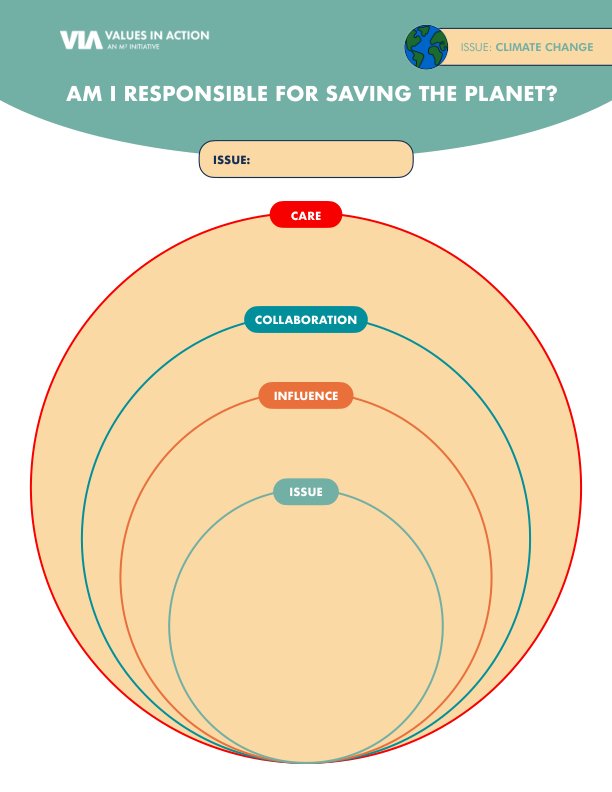
Even without thinking about climate change, the various responsibilities we juggle in our lives can feel overwhelming. We might not be ready or able to begin focusing on responsibilities to the climate or the wider world around us. Or maybe we have another social justice issue that we are focusing on at the time being. For those of us who do feel ready to take responsibility for the climate - or really any big issue, it is natural to feel unsure about where to begin. By focusing on the areas where we have the most control or influence, we can start small and build momentum toward meaningful change. Every action, no matter how small, can contribute to our larger world. The "Sphere of Influence" framework can help us explore how we can take action around an issue that we care about. By mapping out what you can control, influence, collaborate on, and care about, we can gain clarity on your own responsibility to care for the climate, and where our actions can make the most impact.
Facilitator Prompts with the following instructions:
Questions for Reflection:
Now that you have had an opportunity to map out your own sphere of influence, I invite you to utilize the following prompts to explore your responsibility in taking action toward a specific climate change issue that matters most to you.
Facilitator prompts the group: Taking a look back at the Sphere of influence activity, I invite you to notice:
Pop Up that come after 2 clicks on page just for one time in coockes session